Smart Roadside Tree-Fall Prevention: Early Warning for Public Safety in Taiwan
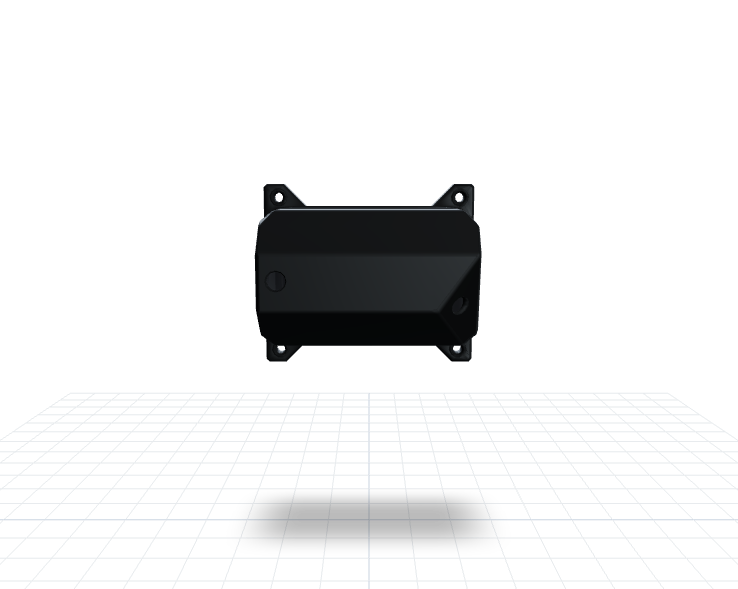
Around storms, tracking tree lean one by one is hard. M20 tilt sensors report angle changes so road agencies can spot shifting trees and check them first.
Project Profile
- Region: Taiwan
- Category: City
- Products: M20
Operational Value
- Operational objective — Faster response to tree-instability alerts (not a measured project outcome)
- Threshold alerts — Track changes in tree angle to guide on-site checks
- Operational objective — Fewer manual inspections in severe weather (not a measured project outcome)
Case Snapshot
During typhoons and heavy rain, road authorities need visibility into roadside-tree conditions while protecting inspection crews. This Taiwan case uses M20 tilt sensors to track changes in tree angle and inform inspection priorities. The purpose is to identify angle changes, not to determine tree health or predict a time of failure from a single sensor reading.
Problem
Visibility Between Inspection Rounds
Trees near traffic lanes, intersections, or pedestrian routes can affect road access and public safety if they fail. Conventional inspection relies on fixed routes, visual checks, and public reports, all of which can be constrained during a typhoon or heavy downpour.
Authorities may have limited time to identify trees showing abnormal tilt and decide where crews should check first. If a problem is discovered only after a tree falls or a branch breaks, the response may involve road closure and clearance as well as risks to vehicles and pedestrians.
Solution
Tilt Becomes a Signal Anyone Can See
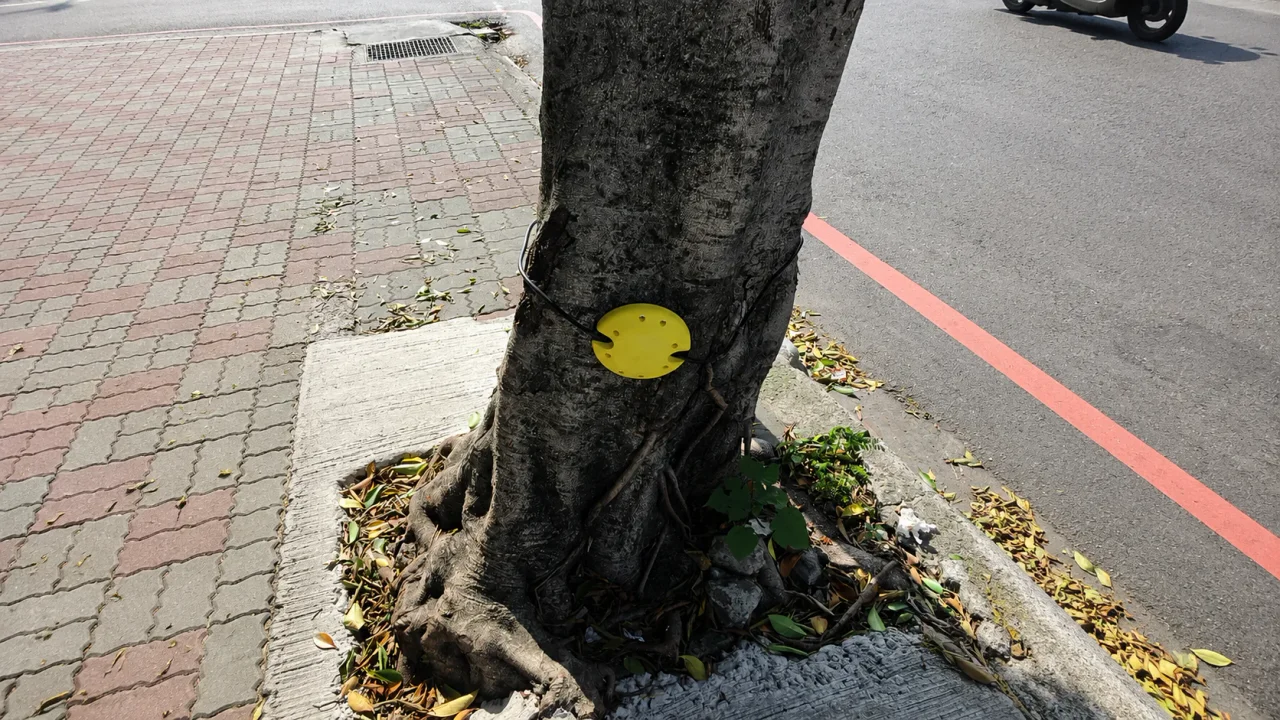
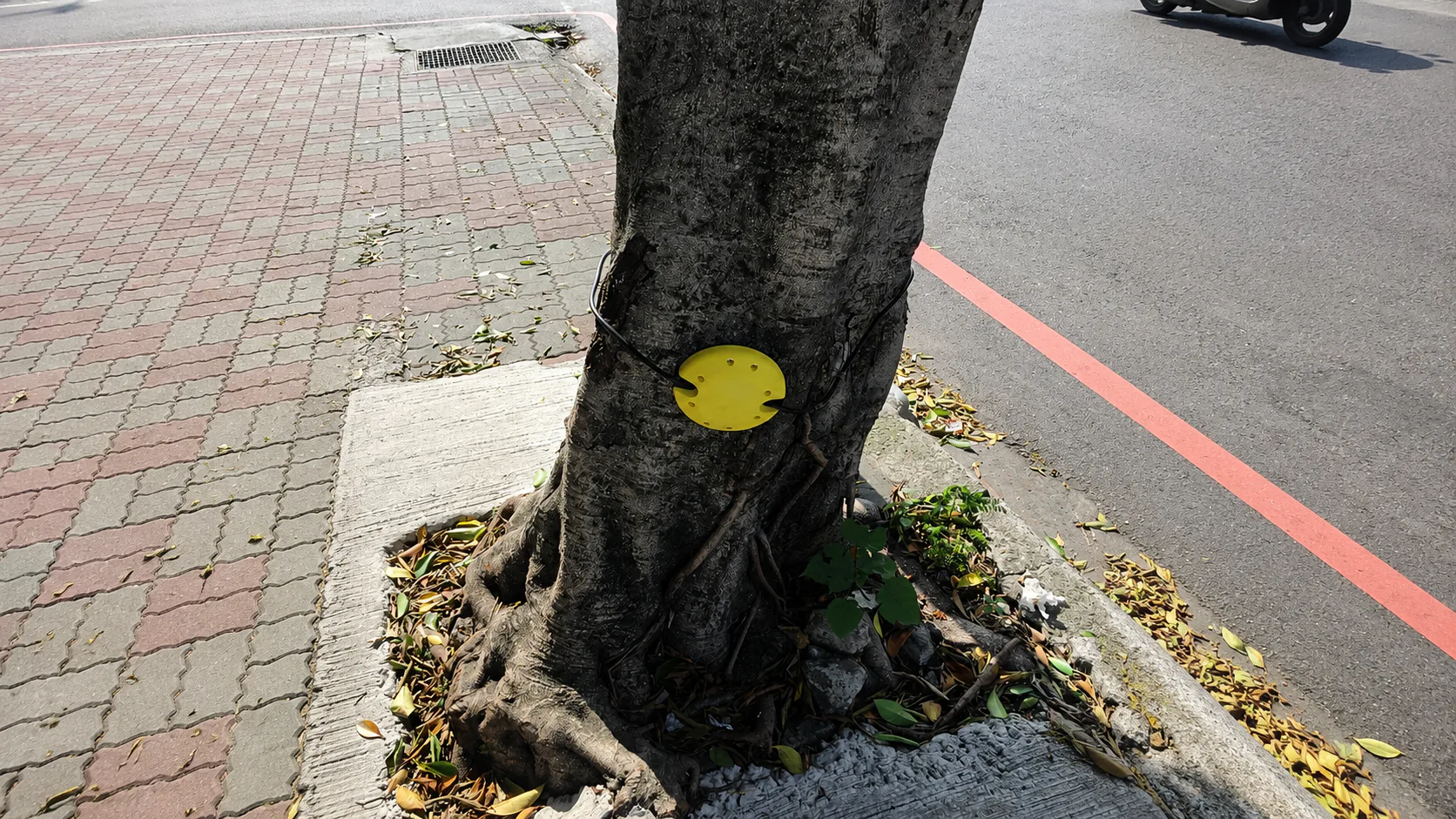
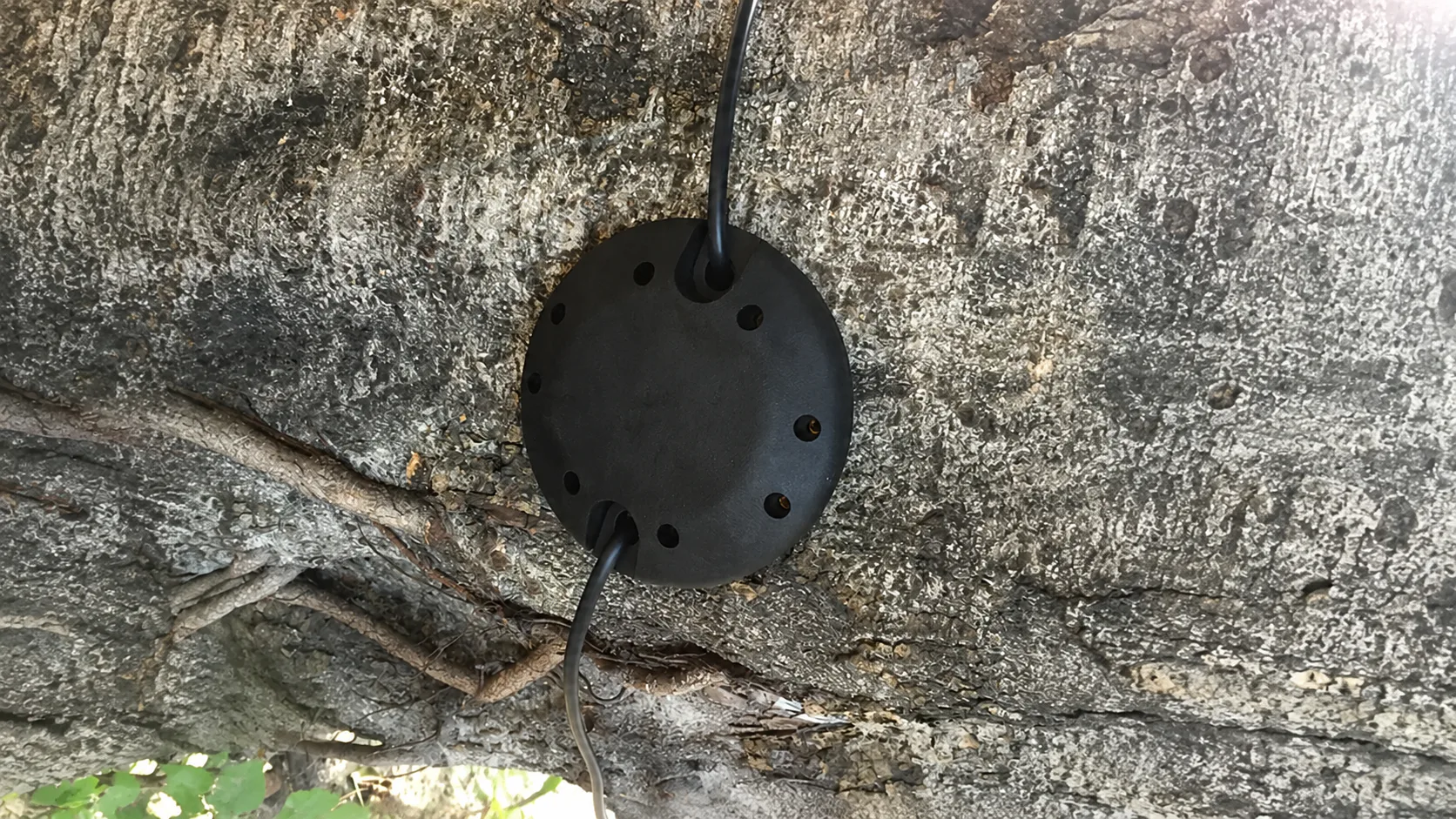
M20 tilt sensors on selected trees track angle changes and transmit monitoring data wirelessly. Deployment requires a sensor-to-tree location register and confirmation of the mounting baseline, reporting interval, communications conditions, and alert thresholds. These records allow abnormal readings to be associated with locations requiring a check. An angle reading is not a direct measurement of displacement, root condition, or branch loading.
Following an alert, crews should inspect when conditions are safe; the responsible team and tree-care professionals can then assess pruning, reinforcement, or traffic control. A sensor reading alone should not determine the intervention.
Value
Reinforce Early, Instead of Clearing Up Afterward
A continuing angle record gives teams an additional reference for comparing the same tree over time and planning inspections. Readings should be interpreted alongside weather, mounting condition, and on-site observations. The absence of an alert does not establish that a tree is safe.
The operational objective is to make follow-up checks and maintenance decisions traceable.
Next Step
Before typhoon season, identify trees with prior tilt, fall incidents, or high-risk locations, then prioritize which ones are the strongest candidates for monitoring.
Explore Solutions / Talk to an Expert
Image Gallery
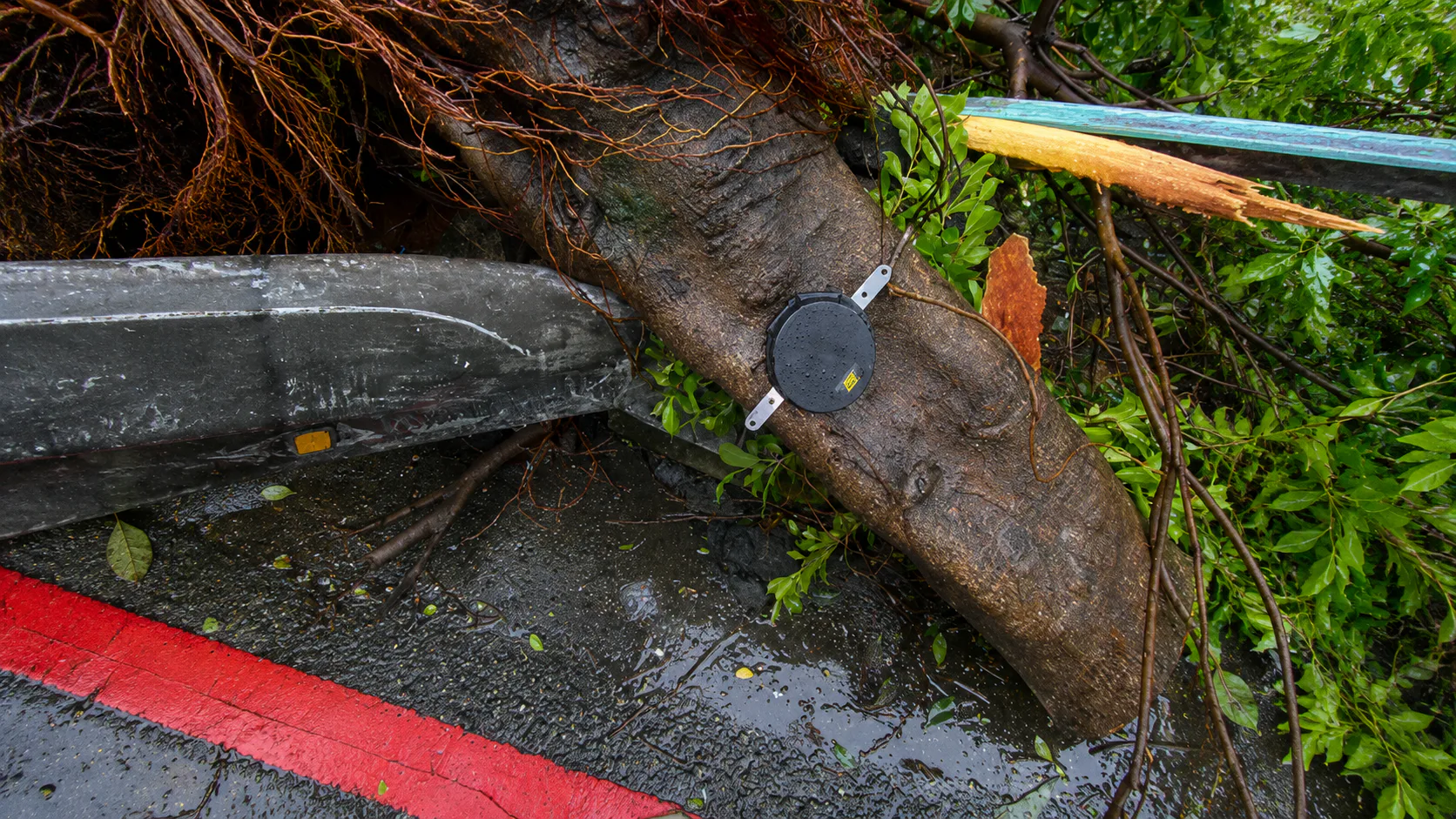
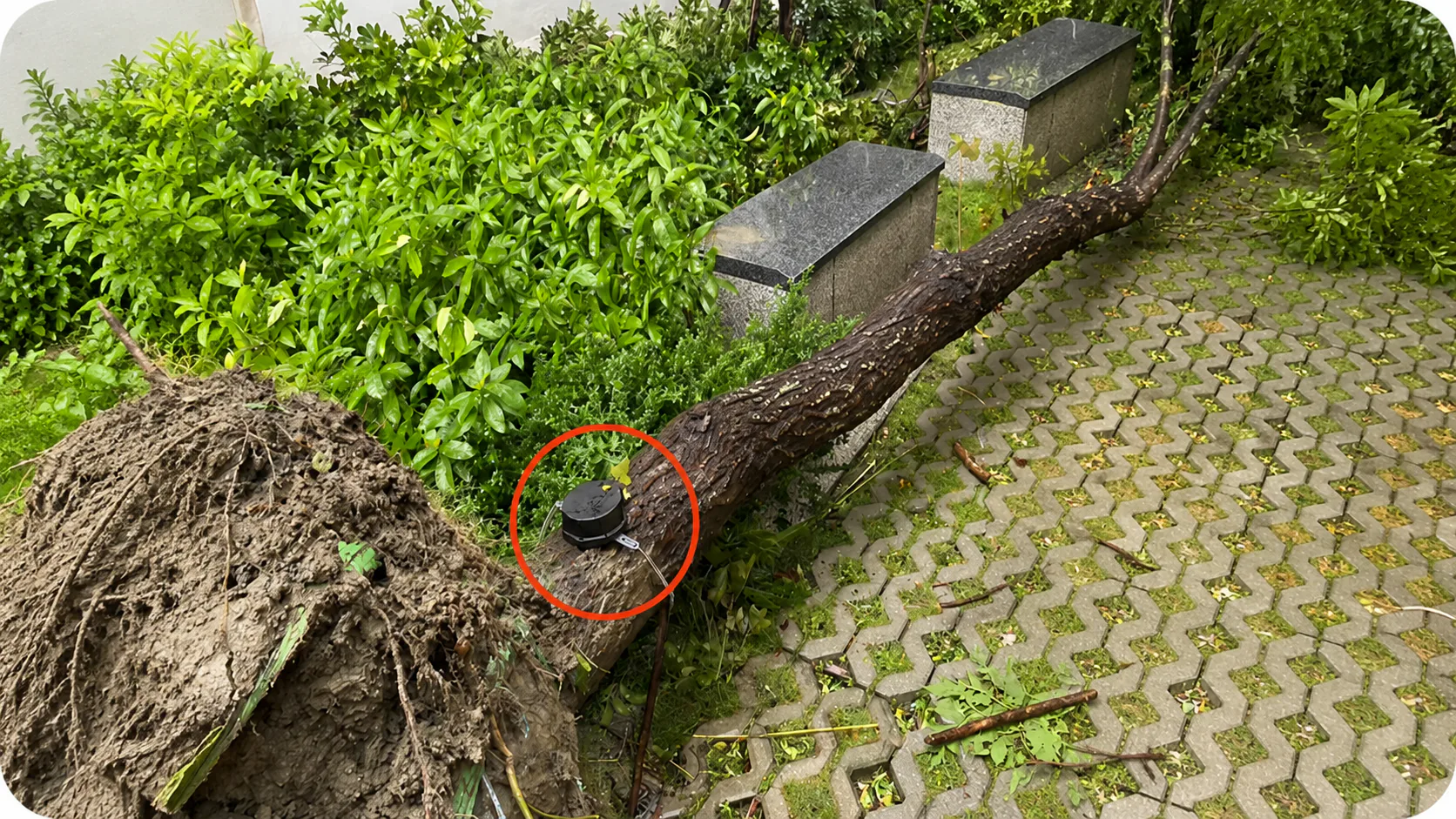
A record of the fallen-tree condition; the photograph alone does not establish that an advance alert occurred or validate early-warning performance.
Notes
- Wireless reporting can reduce communications cabling, but mounting, power, coverage and maintenance still require site assessment.
- Tilt monitoring supplements rather than replaces routine inspections and professional tree-risk assessment; this case provides no verifiable warning lead times, incident-reduction rates or intervention statistics, so risk reduction is not presented as a measured outcome.
- Every site is different; deployment plans and outcomes should be assessed by qualified professionals against actual site conditions.