One Less Hesitation, One Less Correction: Tanker Bay Guidance at a UAE Heavy-Vehicle Facility
In a tight yard, a hesitant tanker means on-the-spot corrections. Bay sensing with red–green signals shows drivers whether to proceed or wait before they arrive.
Project Profile
- Region: UAE
- Category: Logistics
- Products: P08-NW
Operational Value
- 100% — Deployed bay status visibility (Deployment scope)
- Long-Range Visibility — Red/green LED entry guidance (Confirmed before approach)
- Operational objective — Reduced docking hesitation time (not a measured project outcome)
Case Snapshot
For heavy vehicles and tankers, the decisive moment usually comes before docking even starts. At a UAE heavy-vehicle facility, P08-NW NB-IoT parking sensors paired with red/green LED signals now let tankers — known for wide turning radii and slow, careful positioning — confirm bay status before the approach, cutting the hesitation that used to build up at entry points and corners.
Problem
In Tight Bays, Hesitation Has a Cost
Docking a tanker is not an ordinary parking maneuver. Every approach demands a wider turning radius, slower positioning, and close attention to nearby vehicles, pedestrians, and site rules. When drivers couldn't confirm bay availability from a distance, they fell back on experience, hand signals, or close-range checks.
In a space-constrained facility, that uncertainty carries a real cost. Hesitation and stalling slow the whole flow, and close-range checks stretch out every docking cycle. When a route changes at the last second, a tanker forced to reverse or correct in tight quarters risks coming close to nearby vehicles, structures, or people. The real gap was not bay supply — it was whether drivers could decide before they arrived.
Solution
Long-Range LED Signals Deliver the Answer Early
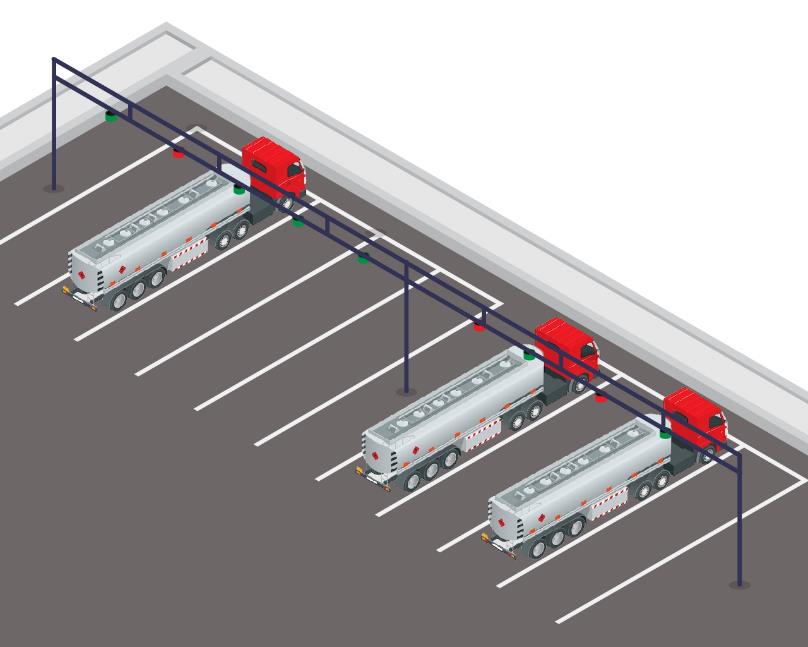
P08-NW NB-IoT parking sensors were installed at instrumented bays to detect occupancy, paired with high-visibility red and green LED indicators so the result was readable from a distance, long before a driver reached the bay.
Drivers no longer had to reach the bay to find out whether they could enter — the LED let them decide earlier: proceed, wait, or choose another bay. NB-IoT carried the status back to the platform, while the LED made it usable on the ground the moment it mattered.
Value
One Less Hesitation Is One Less Correction
Drivers used to judge each approach by feel; now bay status reaches them before they commit to the turn, so the decision happens before arrival — cutting unnecessary stopping, reversing, and last-minute repositioning. The gain isn't confined to one bay: daily heavy-vehicle flow becomes more predictable across the facility.
Docking behavior also becomes easier to standardize across shifts and drivers. Drivers now turn in as soon as they see green, instead of reversing while checking the mirror.
Next Step
A site layout and the locations where drivers have limited sight lines are enough to start discussing which corners or bays would benefit most from status signals.
Explore Solutions / Talk to an Expert
Image Gallery
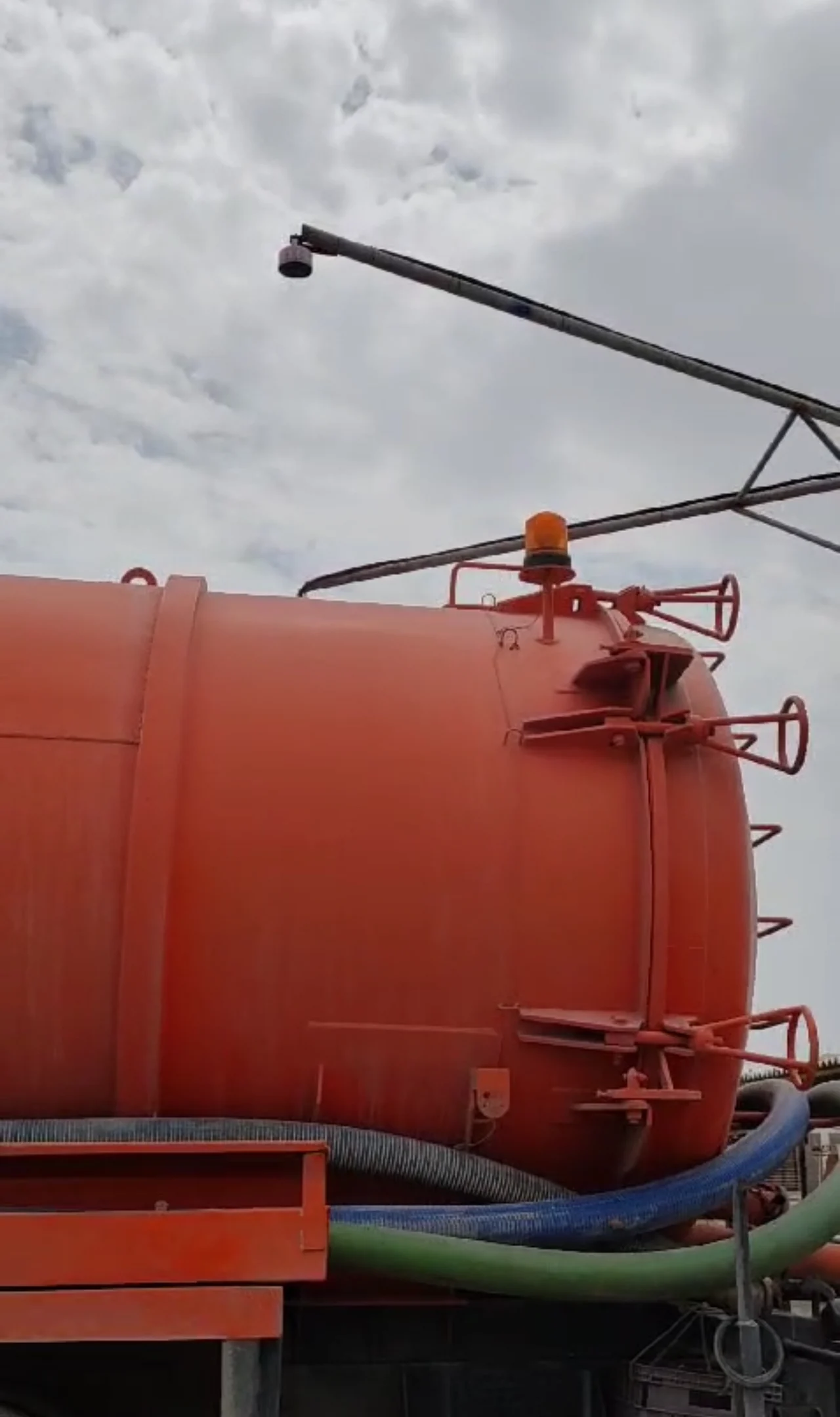
On-site installation: sensing devices positioned above the vehicle bay.
Notes
- Every site is different; deployment plans and outcomes should be assessed by qualified professionals against actual site conditions.