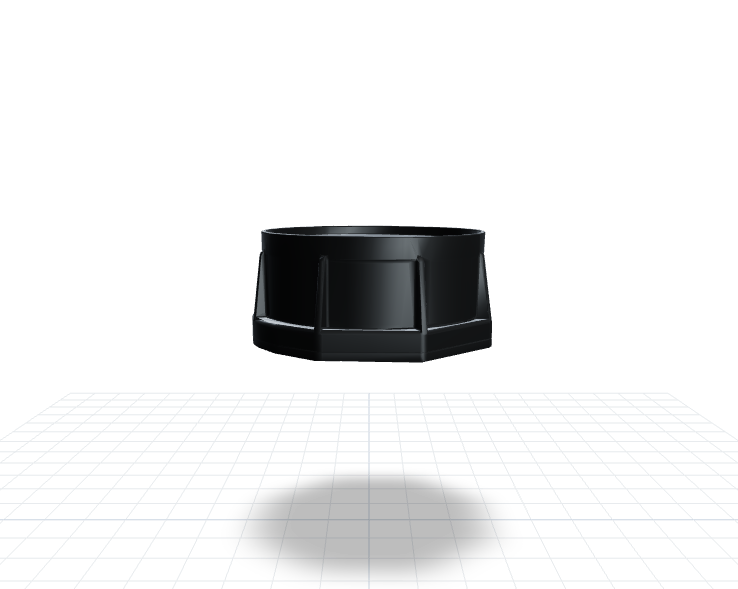
Before the Street Floods: In-Manhole Level Warning for Urban Drainage in China
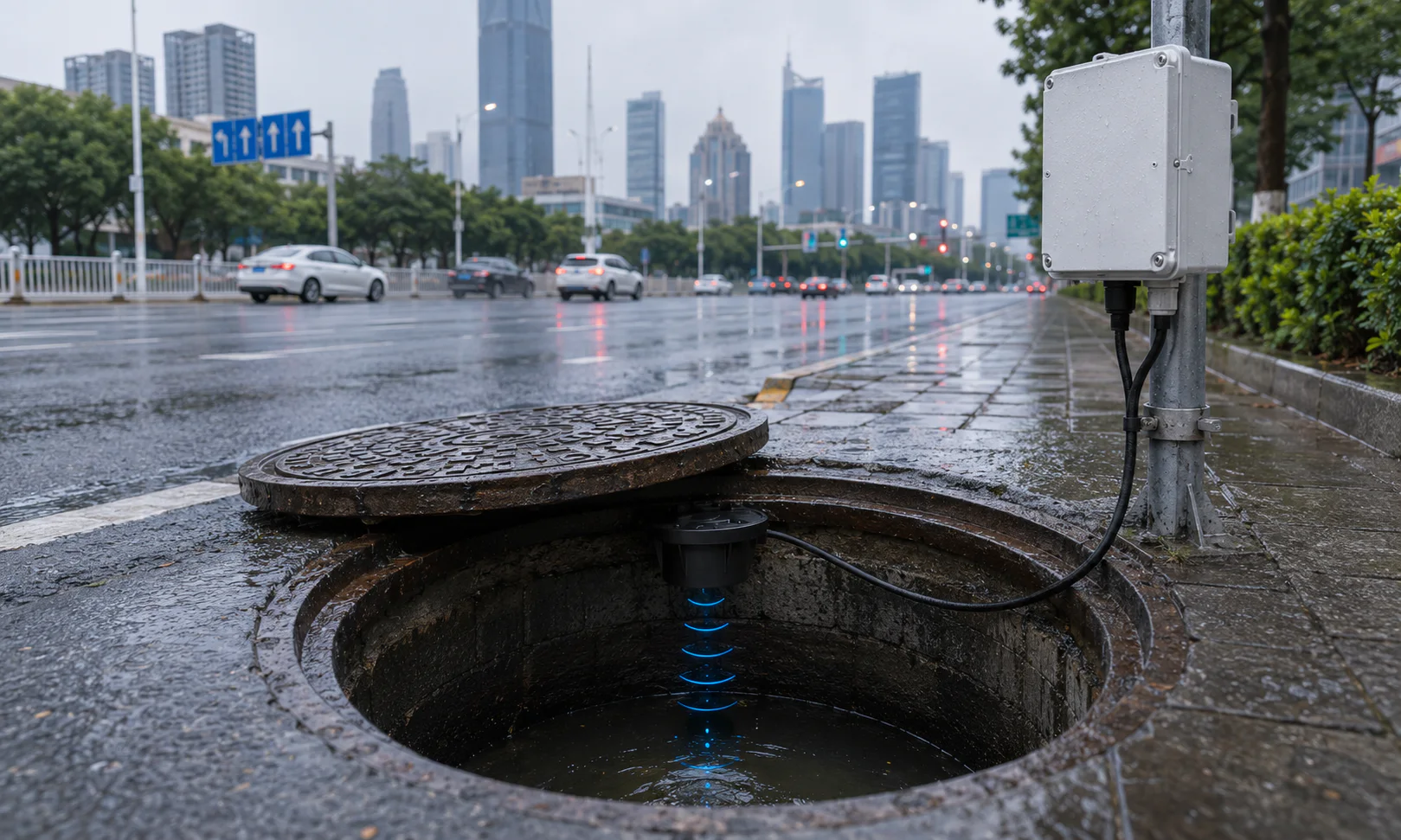
Water can rise inside a manhole before the street floods. H01-NW reports in-manhole levels over NB-IoT so drainage teams can start assessing sooner.
Project Profile
- Region: China
- Category: Environment
- Products: H01-NW
Operational Value
- Proactive Alerting — Manhole water level signals before surface flooding (Early signal)
- Dual Monitoring — Water level and cover status (Synchronized visibility)
- Operational objective — Fewer manual inspections during rainfall (not a measured project outcome)
Case Snapshot
Most people treat flooding as something that starts on the surface, but drainage systems often work in the opposite order — water inside a manhole typically rises before it shows up on the road. A municipal drainage authority in China needed to put that lead time to use: H01-NW radar sensors, NB-IoT connectivity, and cover-status detection now send underground water-level and cover data back to one platform, so risk judgment no longer waits for visible flooding.
Problem
The ground rises before the surface floods
Urban drainage systems are hardest to read accurately exactly when it matters most — during heavy rain. When water inside a manhole rises quickly, the road above may not yet show obvious standing water. When management relies mainly on manual patrols or field reports, drainage anomalies, backflow risk, and cover open/close status often can't be tracked in real time.
That delays drainage dispatch and road control, and it puts patrol staff closer to roads, manholes, and standing water in poor weather, raising their own risk. More critically, it's a timing problem. The underground water level provides a lead time that could go toward positioning pumps or closing a risky stretch early — but if response waits for visible flooding, that window gets used up waiting. By the time water is visible, the options left are the escalated ones, not the preventive ones.
Solution
An external antenna keeps the signal steady
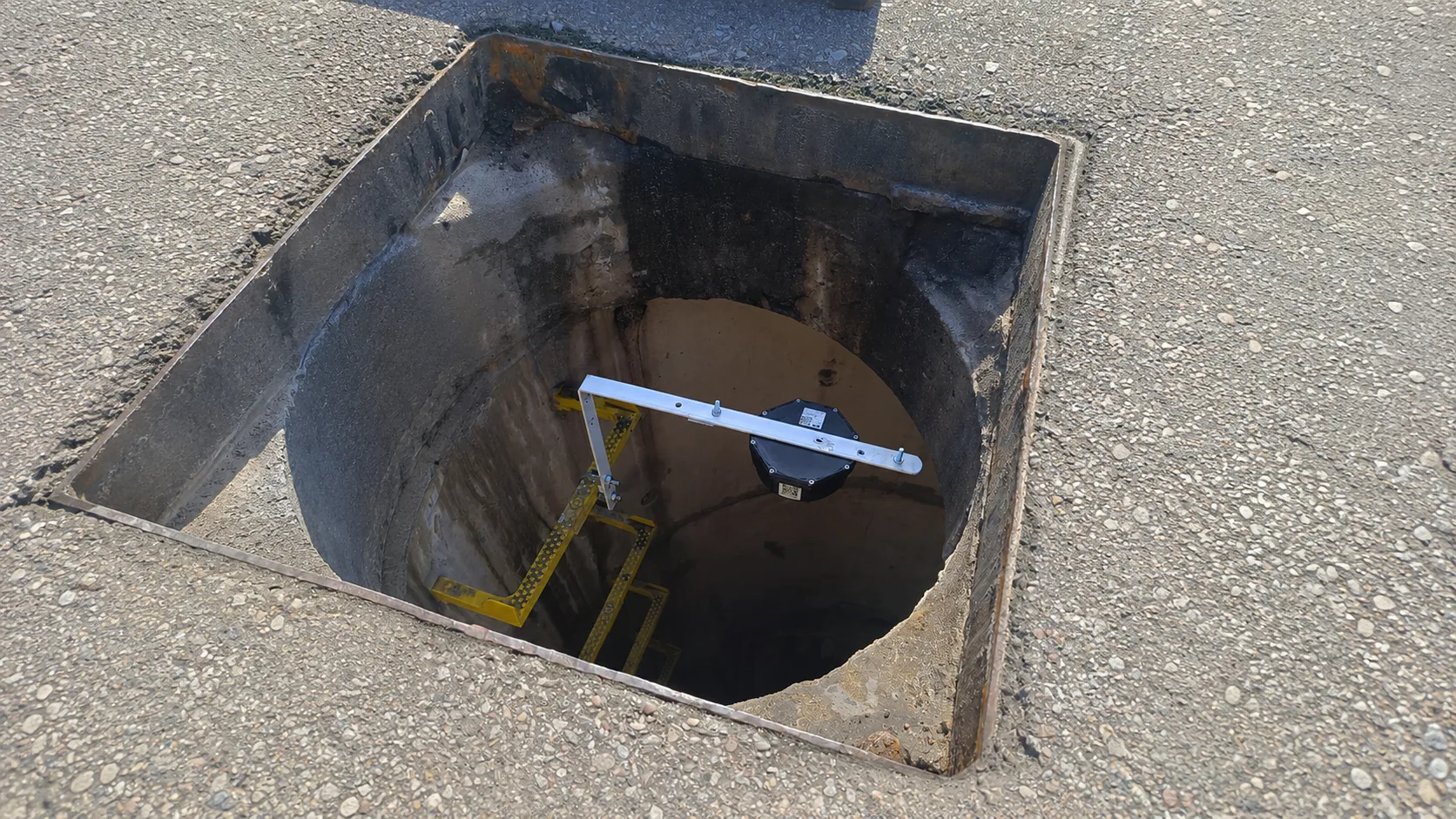
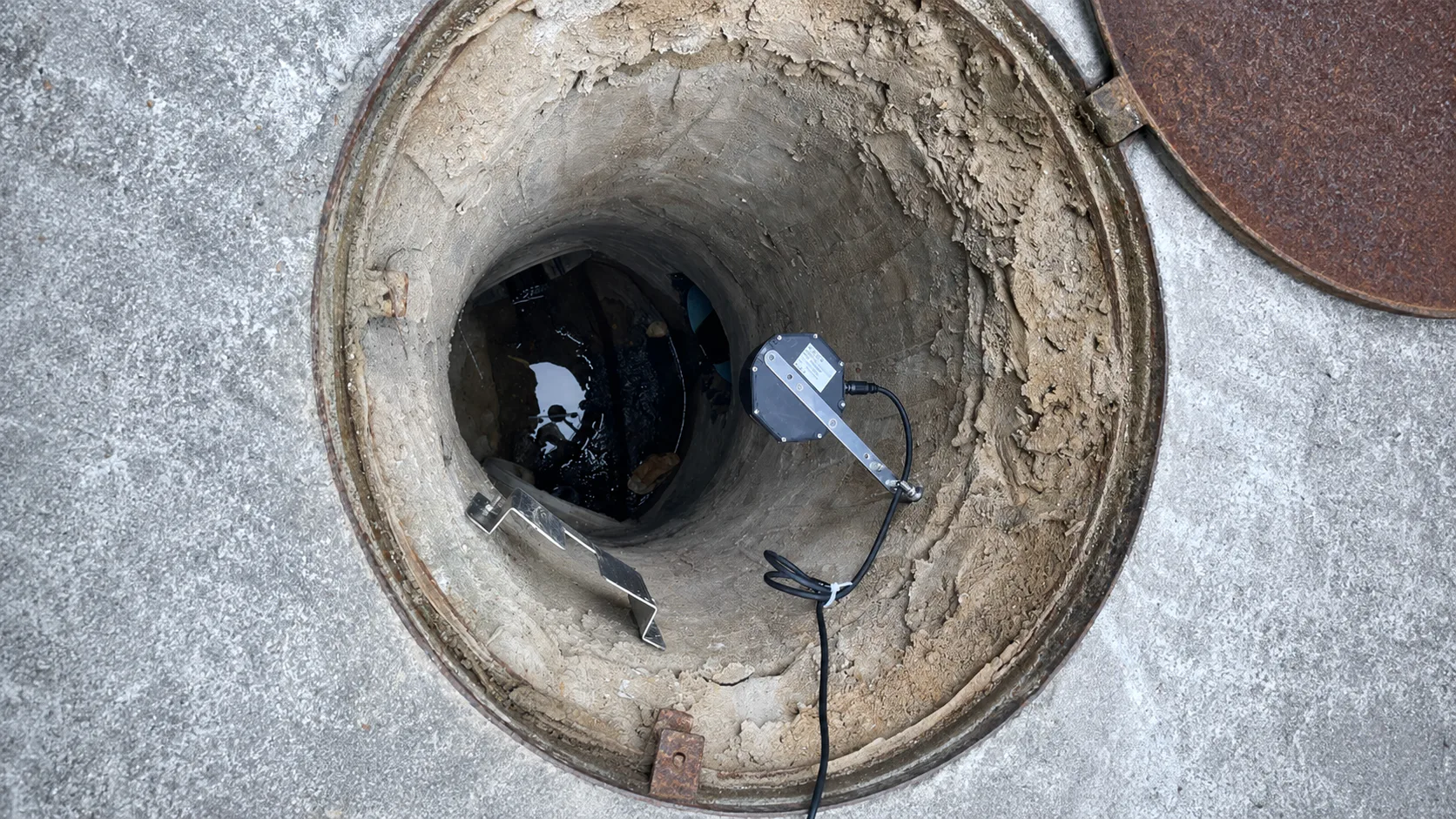
H01-NW radar sensors were installed inside drainage manholes to continuously measure underground water-level changes while also monitoring whether covers were open, closed, or in an abnormal state.
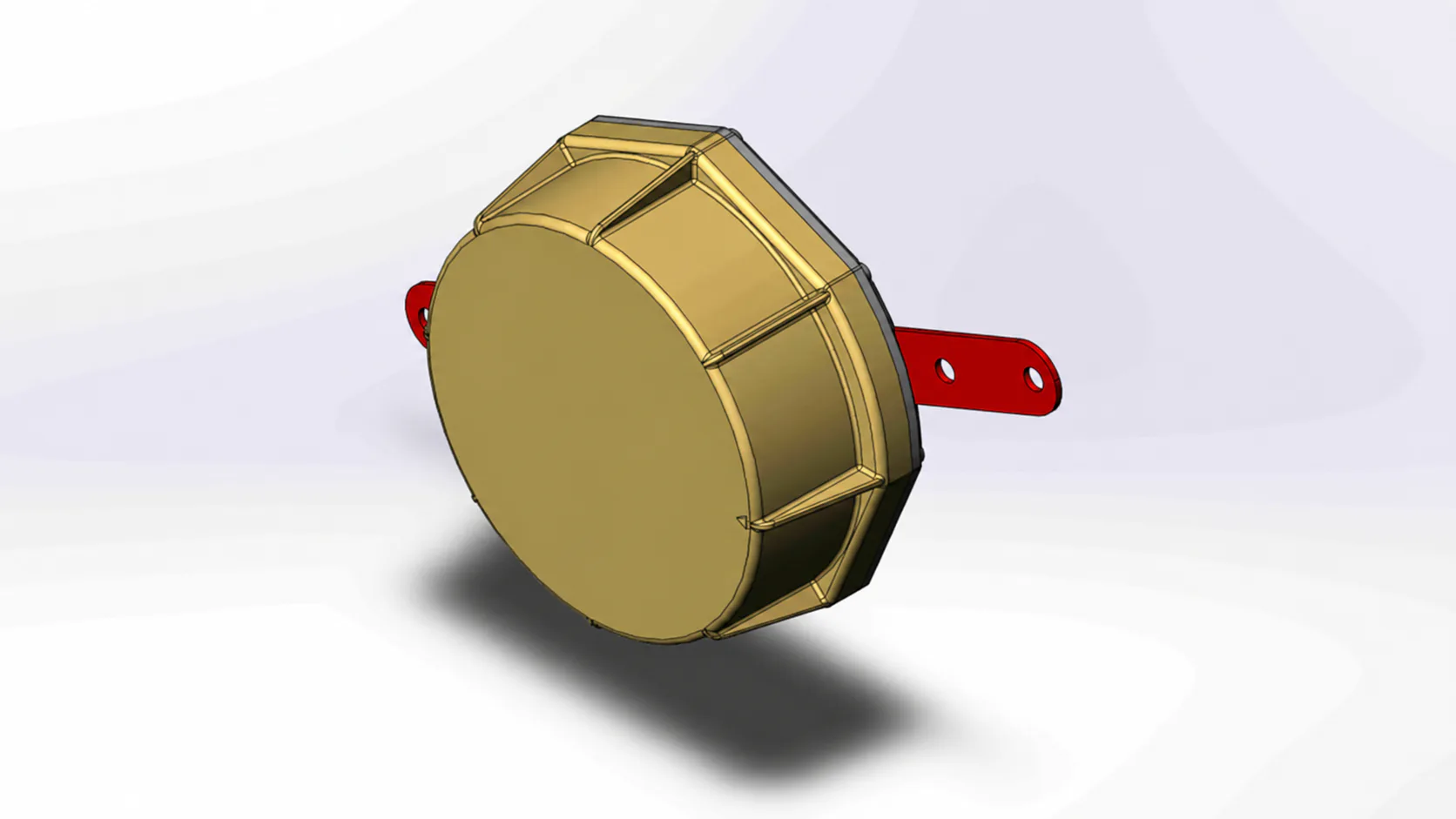
Sensor data reaches a central platform over NB-IoT, triggering an alert and supporting dispatch when water nears its warning threshold or cover status changes. Underground signals tend to weaken quickly, so an external antenna configuration improves communication reliability, letting manhole monitoring deploy at high-risk drainage nodes without a major expansion of wired infrastructure — the underground signal doesn't get lost before it reaches the platform.
Value
Knowing sooner means dispatching sooner
Once underground water rises or a cover shows an anomaly, drainage managers now see it sooner, cutting the time needed to confirm risk and arrange patrols, drainage control, or response before conditions worsen.
The same dual-monitoring logic carries over to any other stretch where a crew would otherwise wade in to check a cover the moment heavy rain hits — the external antenna solves signal loss underground first, water level and cover anomalies travel back to the platform together, and the next junction doesn't need its own wired build-out to join in.
Next Step
Compare timestamps from past flood events with the key manhole locations to assess whether subsurface water-level data could provide a useful warning window before surface flooding.
Explore Solutions / Talk to an Expert
Image Gallery
Notes
- Every site is different; deployment plans and outcomes should be assessed by qualified professionals against actual site conditions.
*Illustrative image