
Violations Move Fast, Records Stay: Bay Occupancy Monitoring on Busy Singapore Streets
On busy streets, violations end before patrols arrive. Bay sensors record occupancy time for designated spaces, giving staff a basis for follow-up review.

Project Profile
- Region: Singapore
- Category: City
- Products: P02-NI
Operational Value
- Real-Time — Space occupancy and vehicle identification (Cloud monitoring)
- Operational objective — Reduced routine patrol workload (not a measured project outcome)
- Automated — Violation event evidence records (Enforcement readiness support)
Case Snapshot
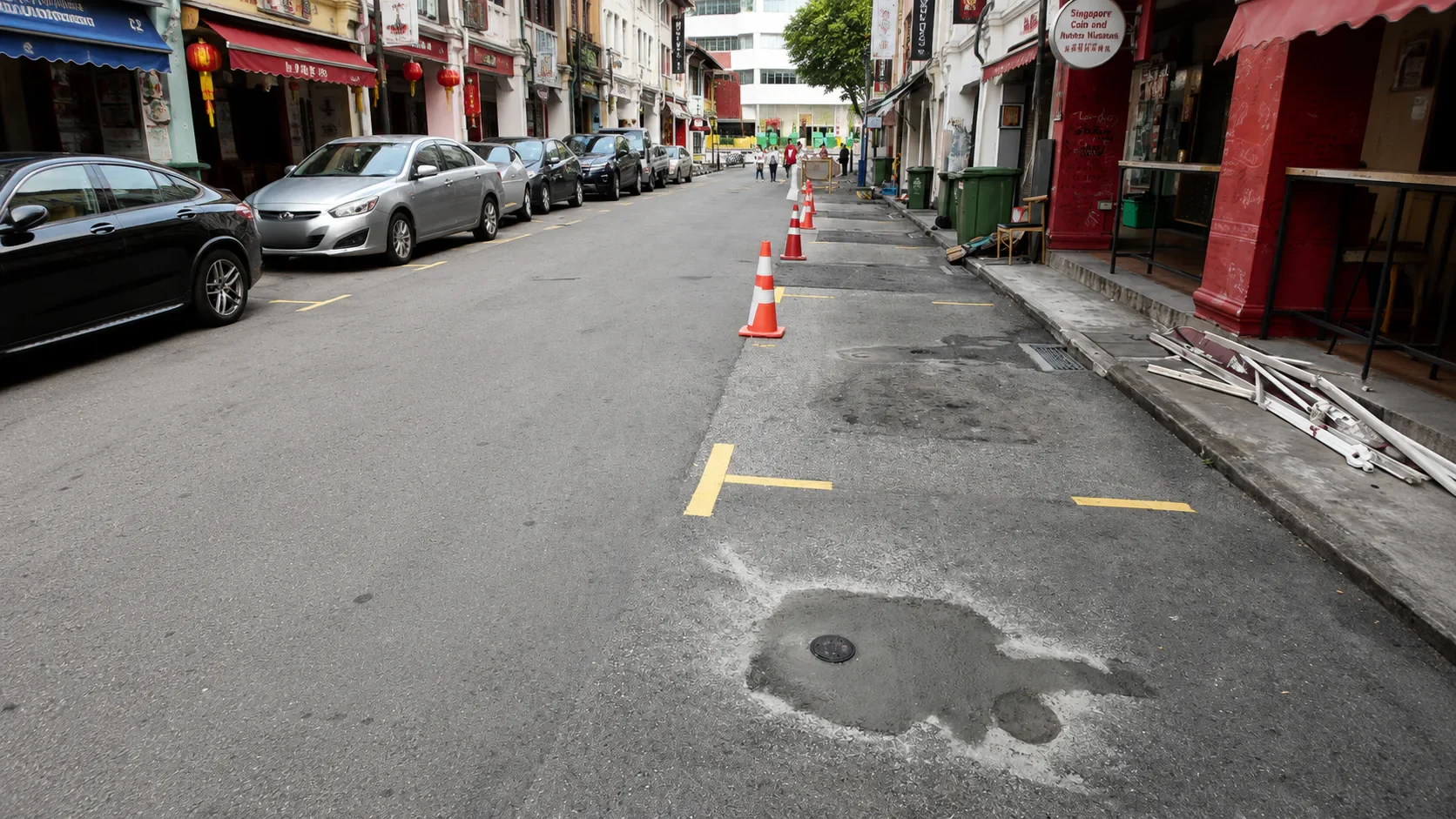
In a fast-turnover curbside parking zone in central Singapore, manual patrols could never quite keep pace with how quickly violations occurred. The operator installed P02-NI in-ground parking sensors at instrumented bays, putting occupancy, vehicle identity, and cloud visibility on one screen — so on-street conditions became something enforcement teams could check and trace in real time, not something they had to catch in person.
Problem
Violations Arrive and Leave Before Patrols Do
In corridors where parking demand is dense, violations and overstays often start and end within minutes. When compliance still depends on officers checking each bay by hand, field staff can easily miss the window — by the time they arrive, the vehicle may already be gone, and there is little left to record beyond a verbal account.
Urban parking operators need traceable, space-level records to compare occupancy times with on-site observations and plan field work. This case provides no appeal or citation-dismissal statistics, so it does not establish how effective the previous enforcement process was.
Solution
Space Sensing Pairs With Vehicle Identity for Evidence
P02-NI in-ground parking sensors were installed beneath instrumented bays, sending occupancy status to the cloud over NB-IoT. When a vehicle enters a bay, the sensor detects its presence and can pair with an in-car identification unit, linking the space, the vehicle, and the occupancy time.
Occupancy and vehicle identity are separate data fields. Identity matching requires a compatible in-vehicle identification unit and corresponding back-end records; an occupancy signal is not license-plate recognition. If no valid match is available, occupancy should remain separate from unknown identity. Management rules and staff review determine whether action is warranted; a monitoring record is not an automatically issued citation.
Operators can view curbside conditions live from the back end, so enforcement prep, anomaly review, and follow-up no longer depend entirely on a patrol passing by at the right moment. Each occupancy event leaves a traceable time-and-location record that supports enforcement decisions rather than relying on an officer's memory of the scene.
Value
Every Monitored Space Becomes a Traceable Record
The back end can organize occupancy records by bay and time, adding a vehicle association when a valid identity match is available. These records can support patrol prioritization, but this case provides no before-and-after comparison of patrol frequency or staff hours and does not establish measured labor savings.
Transparency and consistency across the enforcement process improve together. Directing limited field staff to where action is actually needed is the most direct payoff along high-demand streets.
Next Step
Choose a few recurring violation disputes and review what evidence is missing today; that provides a practical basis for judging whether space-level sensing can strengthen the record.
Explore Solutions / Talk to an Expert
Image Gallery

Notes
- Every site is different; deployment plans and outcomes should be assessed by qualified professionals against actual site conditions.
*Illustrative image