
Spotting Blocked Bus Stops Sooner: Stop Occupancy Detection on a Taiwan Transit Corridor
By the time a patrol passes, a blocked stop has already turned buses away. Eleven sensing points along each stop flag likely obstruction so enforcement knows sooner where to go.
Project Profile
- Region: Taiwan
- Category: City
- Products: P02+P08
Operational Value
- Operational objective — Reduced routine patrol workload (not a measured project outcome)
- 11 Points — Consecutive sensing across each bus bay (Deployment scope)
- Operational objective — Faster identification of probable violations (not a measured project outcome)
Case Snapshot
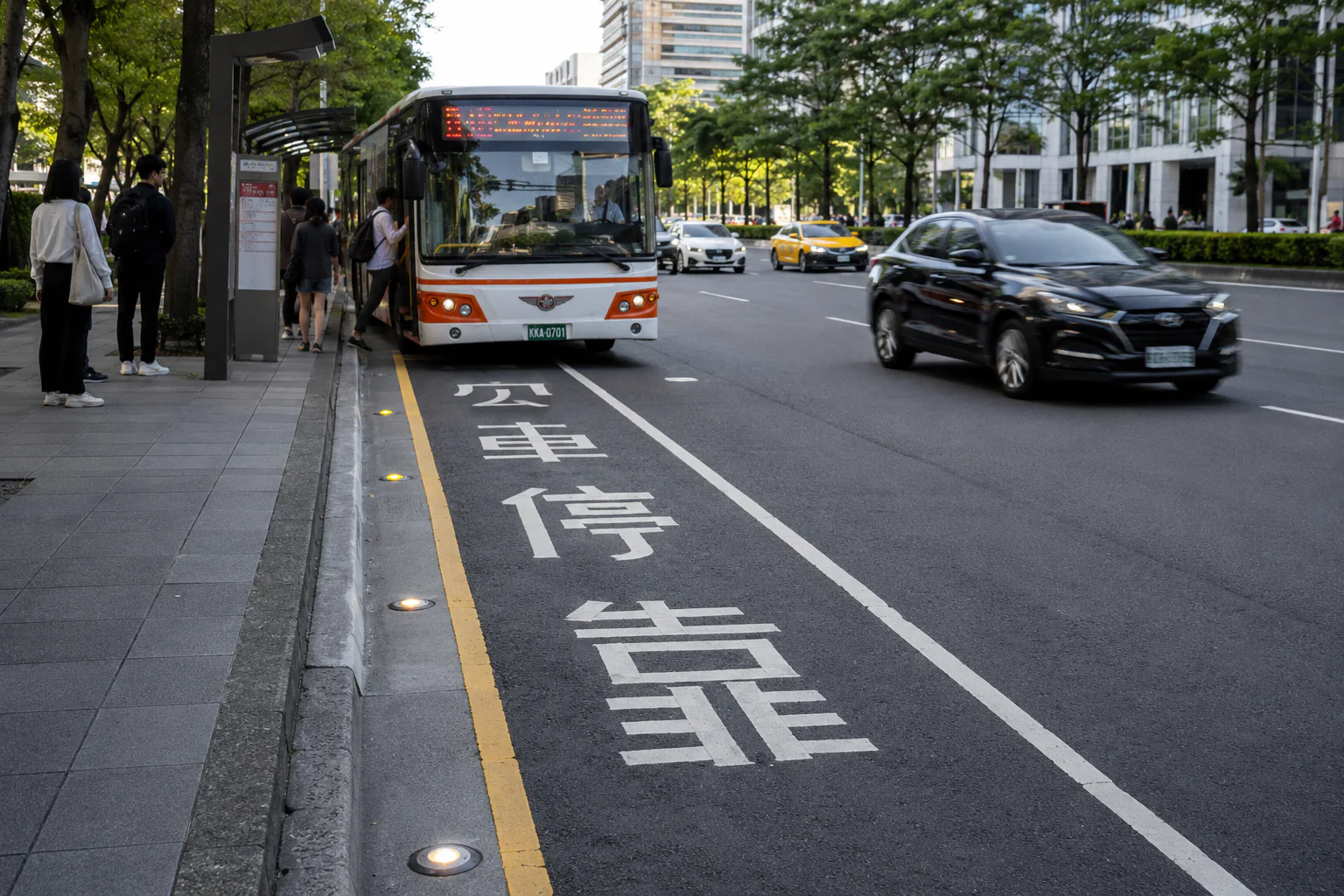
Whether a bus can dock on schedule often comes down to a few meters of curb. Along an urban transit corridor in Taiwan, informal stops and illegal parking kept blocking bus bays, delaying boarding and adding pressure to patrol and enforcement scheduling. The deployment paired P02 and P08 parking sensors with 11 consecutive sensing points along each monitored bay and rule-based logic to flag probable violations as they happen.
Problem
Patrols Found Out After the Bus Already Couldn't Dock
A bus bay carries the on-time performance of the whole route — it's not simply one curbside space. When a private or briefly parked vehicle occupies it, buses may fail to dock cleanly, boarding distances grow, surrounding traffic gets diverted, and downstream schedules can slip.
Relying mainly on foot patrols means officers typically catch the problem only when passing by, and by then the violation is often only addressed after a bus has had to route around it or a rider has complained. As the network of monitored stops grows, that model also becomes a heavier staffing burden.
Solution
Eleven Sensing Points Tell a Bus From a Car
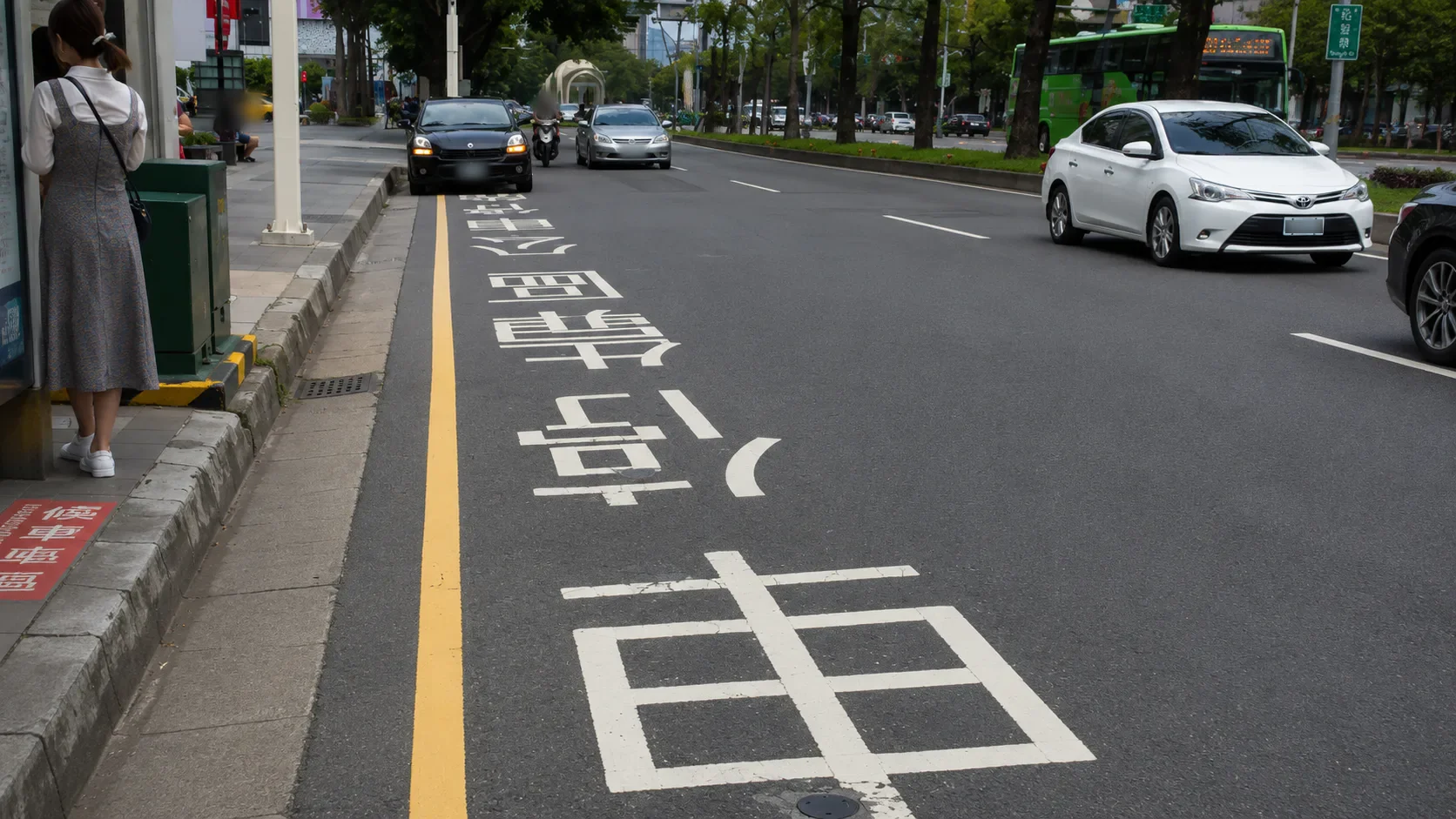
Each monitored bus bay was fitted with 11 consecutive sensing points, using P02 and P08 parking sensors to detect occupancy in real time. The system builds its logic on the difference in occupied length between a bus and an ordinary vehicle.
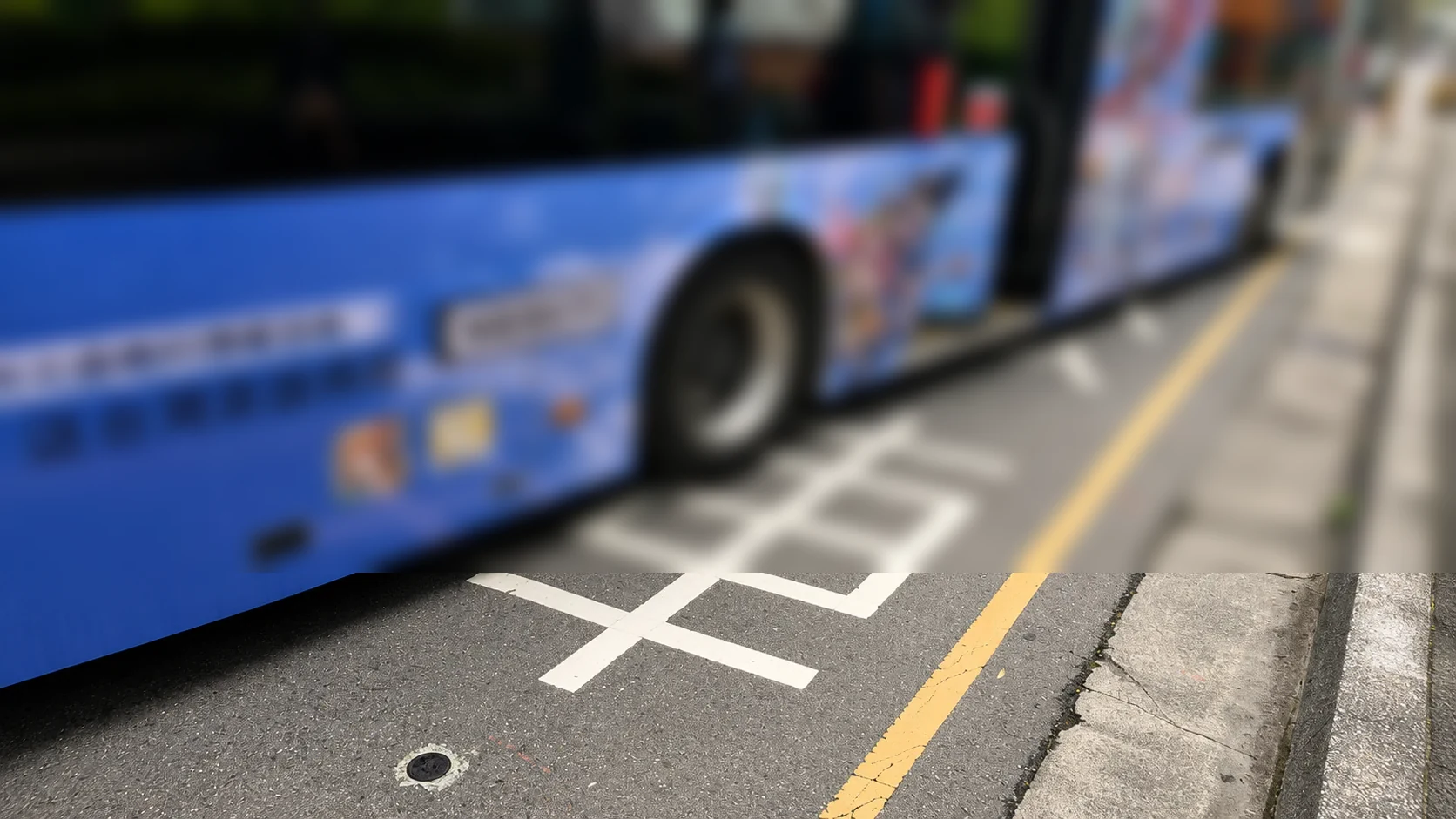
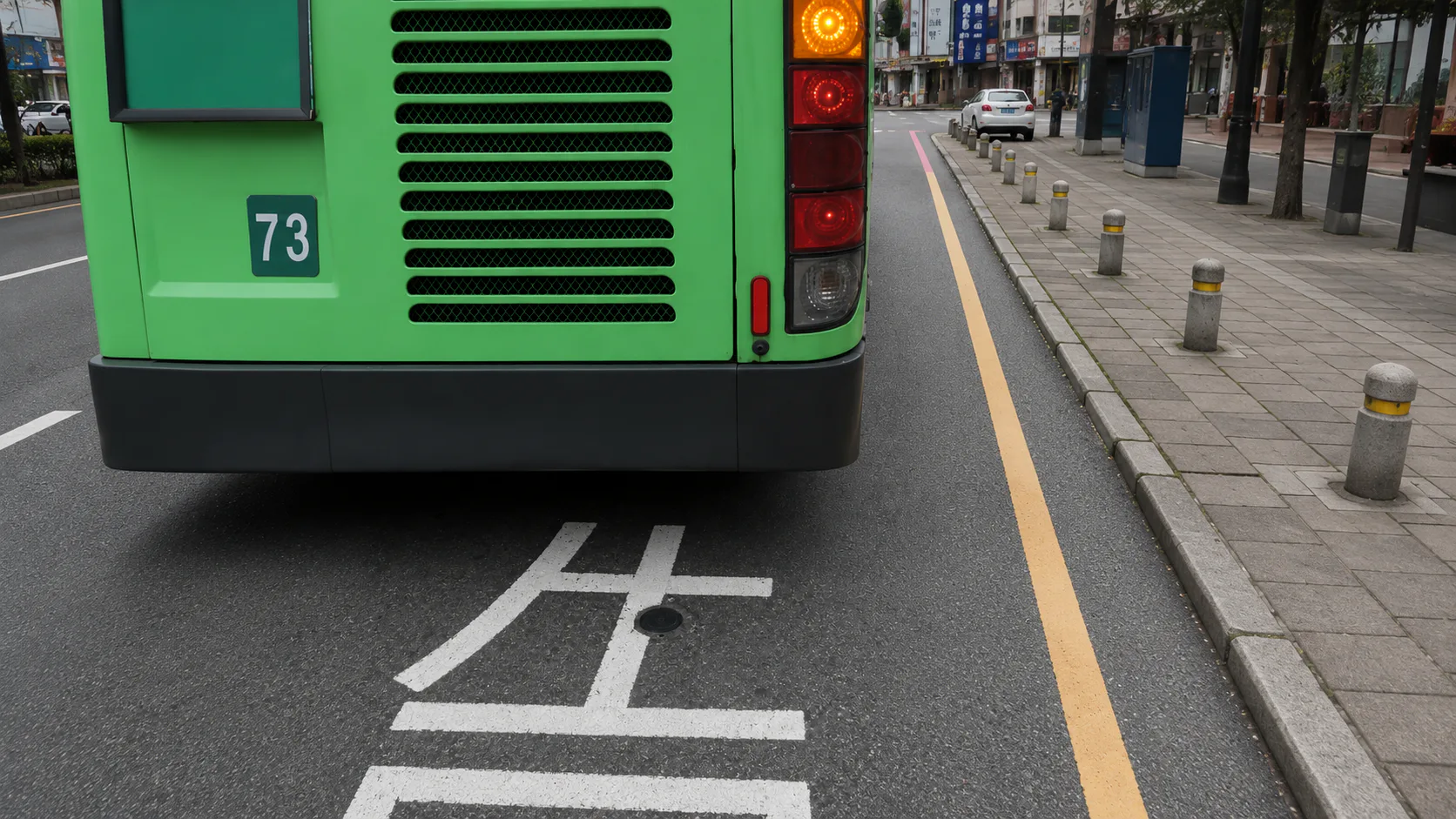
A bus typically covers several adjacent sensor positions at once; when occupancy appears at only a few consecutive positions, it can be flagged as a probable violation under preset rules. Occupancy signals travel over NB-IoT to the enforcement or management system, giving staff earlier notice of events worth acting on.
Value
Enforcement Waits on the System, Not on Reports
Bus-bay management no longer depends solely on manual patrols or public complaints — real-time occupancy data now supports an initial screening step before an officer is ever dispatched. Enforcement teams can prioritize events more likely to affect bus docking, cutting time spent on ineffective patrols and repeated checks.
Transit operators keep bays more consistently available, reducing docking delays caused by illegal parking. A sensing and connectivity setup this straightforward is enough to move curbside bay management toward a scalable, data-driven operating model, without a heavier system behind it.
Next Step
Provide bay length and the current violation rule set to estimate the sensing zone and logic required before committing to a larger field validation.
Explore Solutions / Talk to an Expert
Image Gallery
Notes
- Every site is different; deployment plans and outcomes should be assessed by qualified professionals against actual site conditions.
*Illustrative image