Redundant Electric Fence Monitoring for High-Security Perimeter Protection in Taiwan
With a single reporting path, one cut line can leave the control room unaware. S10 adds a wireless path for fence events and helps retain event, receipt and response times for review.
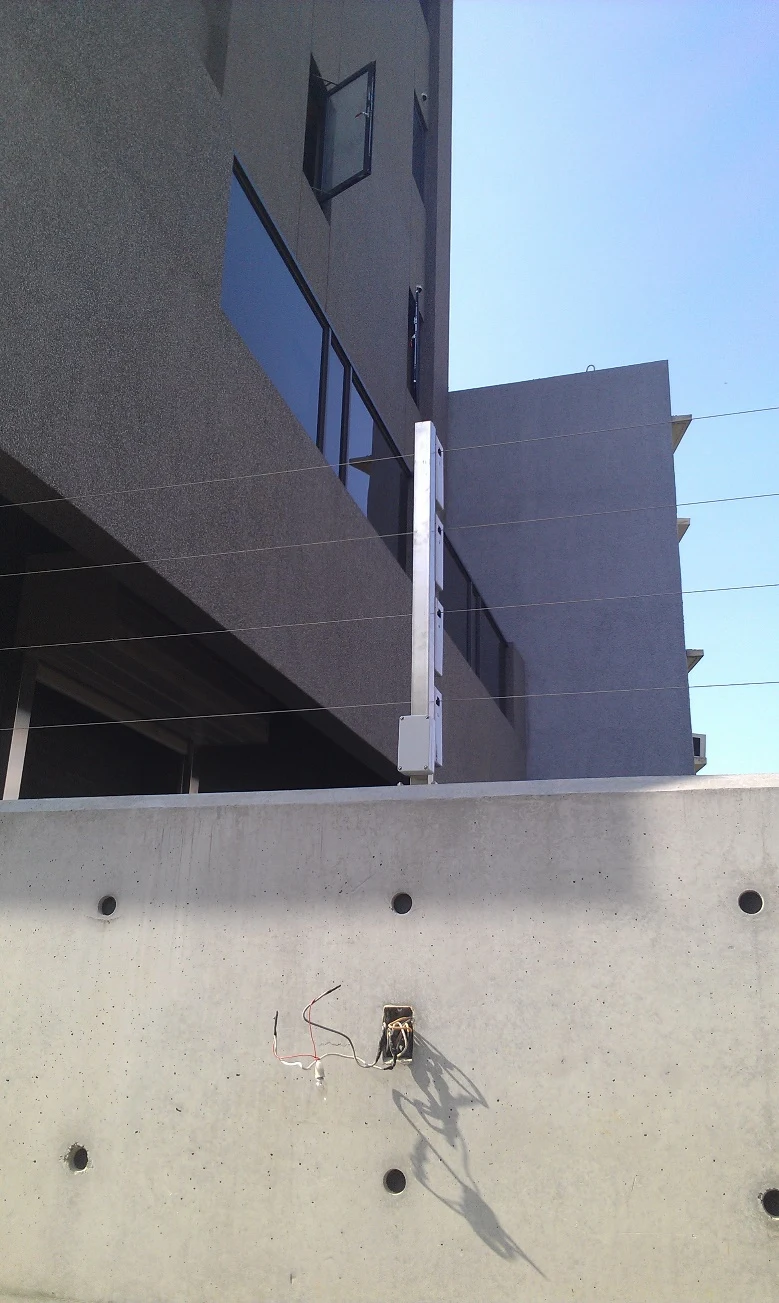
Perimeter field record. Visible installation conditions do not establish final commissioning or alert-delivery acceptance.
Project Profile
- Region: Taiwan
- Category: Industrial
- Products: S10
Operational Value
- Dual-path evaluation — Review wired and wireless reporting conditions (backup capability requires testing)
- Event tracking — Compare send, receive, and response records (not a zero-loss guarantee)
- Existing-system integration — Plan around controller interfaces (site-specific modification scope)
Case Snapshot
A perimeter site in Taiwan sought to improve event reporting around its existing electric fence. This case uses an S10 Network Communication Unit integration application to discuss wired and wireless reporting within one management workflow. Delivery depends not only on the number of paths, but also on controller outputs, power, receivers, and reporting configuration.
Problem
Check detection, transmission, and reception separately
High-security perimeters usually have fencing, pulse hardware, and on-site surveillance already installed, yet event reporting often rides on a single route. Cable damage, network interruption, or deliberate sabotage can leave the system detecting an anomaly while the control room hears nothing.
Controller detection, data transmission, receipt at the management platform, and staff response are separate stages. Confirming one stage does not establish that all are working.
Solution
Put both paths into a testable reporting workflow
The communication unit receives events available from the existing controller and forwards them according to the project design. Reportable cut, tamper, or voltage events depend on the controller's detection capabilities and interface mapping; the communication unit is not itself an intrusion-detection sensor.
The design must establish whether paths transmit simultaneously or switch over, and whether they share power, networks, gateways, or a receiving platform. Two paths with a common point of failure are not fully independent redundancy. Delivery with either path unavailable requires approved non-destructive scenario testing.
Value
Make delivery and response reviewable
The management objective is to retain event, receipt, and response times so teams can check delivery, duplicates, and follow-up needs.
Next Step
Map the current wired and wireless alarm paths and their possible single points of failure, then use non-destructive scenario testing to verify whether an alert still arrives when one path is unavailable.
Notes
- Integration should start with an inventory of existing equipment and event records; interfaces, electrical isolation and integration require engineering confirmation, and how much equipment can remain depends on site review.
- An alert does not establish a confirmed intrusion, and receipt does not establish dispatch; existing security verification and response procedures remain necessary.
- Any reduction in missed reports or response time requires test and operational records; this case does not promise zero lost alerts, connectivity under every condition or elimination of all single points of failure.
- Every site is different; deployment plans and outcomes should be assessed by qualified professionals against actual site conditions.
Explore Solutions / Talk to an Expert