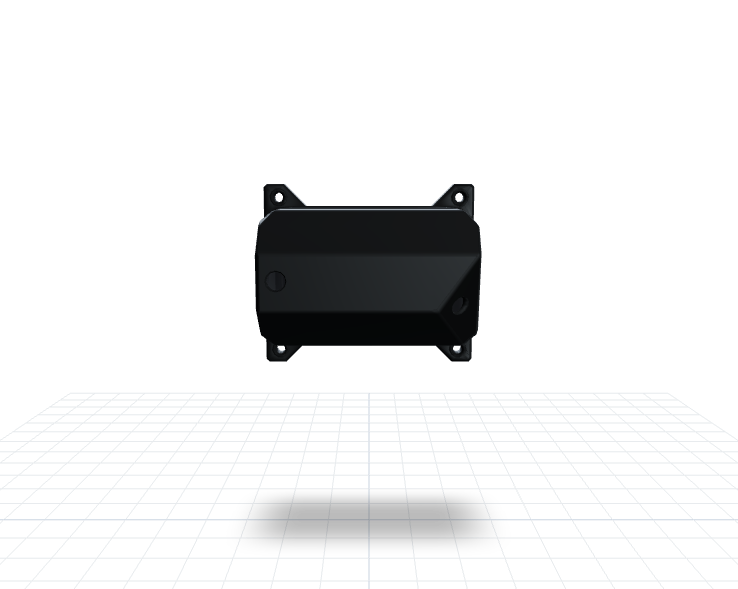
Early Warning for Railway Tunnel Slope Risk in Taiwan
Weather and access limit slope inspections, leaving gaps between visits. M20 tilt sensors report angle records over NB-IoT to help set inspection priorities.
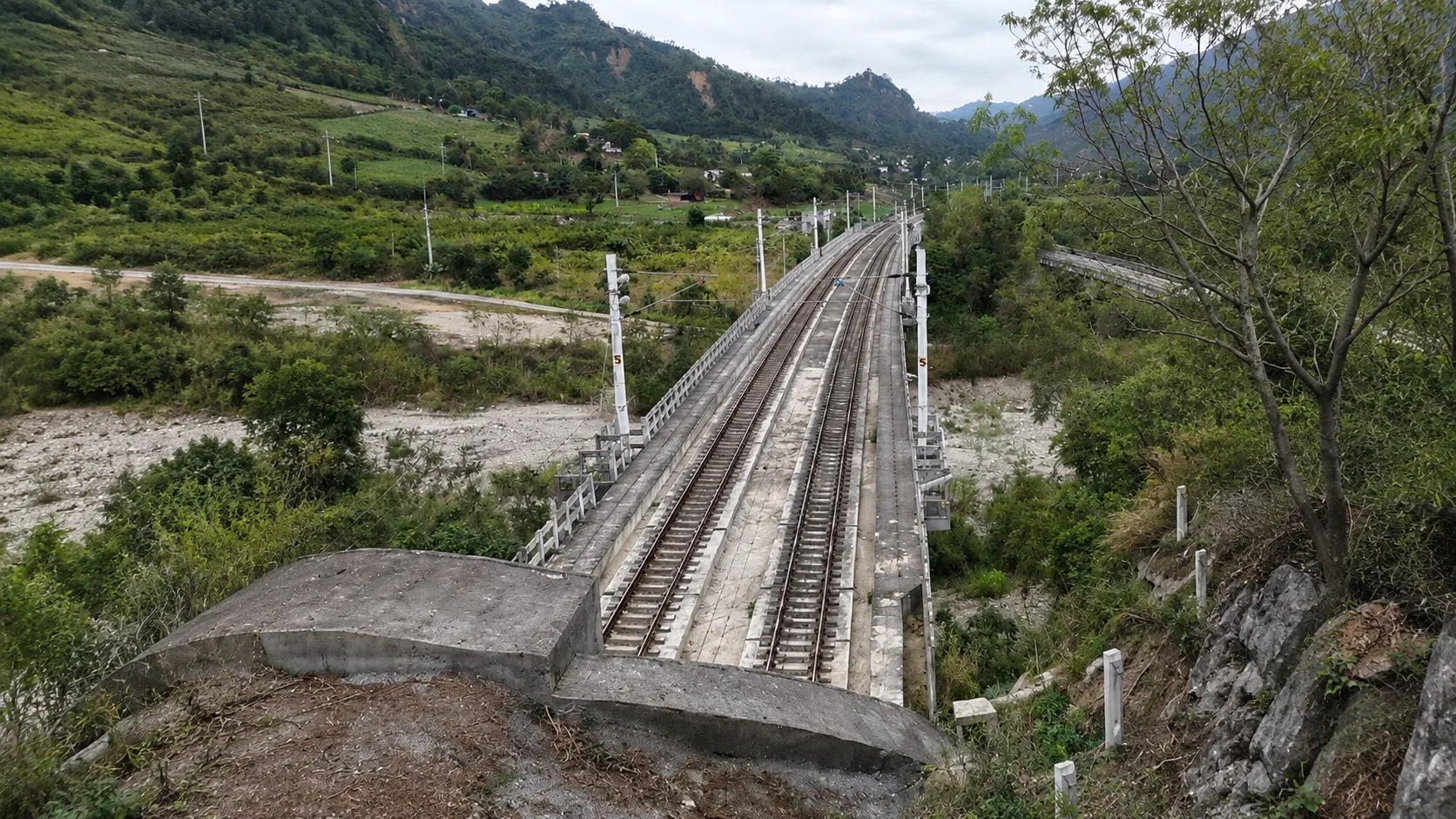
Project Profile
- Region: Taiwan
- Category: Industrial
- Products: M20
Operational Value
- Point trends — Angle changes at installed locations (subject to reporting intervals and connectivity)
- Rainy-Season Priority — Data-driven inspection prioritization (Risk-based allocation)
- Operational objective — Reduced routine-patrol workload (not a measured project outcome)
Case Snapshot
A Taiwan railway-tunnel application uses M20 tilt sensors and NB-IoT reporting to supplement records between manual inspections. The system tracks angle changes at sensor mounting locations and helps maintenance teams identify points for review. Tilt readings alone do not establish displacement across an entire slope, soil loosening, or the timing of a future collapse.
Problem
Keep comparable records between inspections
Slope management requires long-term observation, while staffing, weather, and access affect inspection frequency. Fixed-point angle histories can provide additional context. Changes still require checks for loose mounting, impact, and device condition; not every change establishes geotechnical instability.
Readings should therefore be reviewed alongside rainfall, crack observations, existing geotechnical assessments, and other applicable measurements. Site-qualified professionals should plan the number, placement, and mounting of monitoring points rather than treat one sensor as representative of an entire slope.
Solution
Wireless reporting with a site maintenance plan
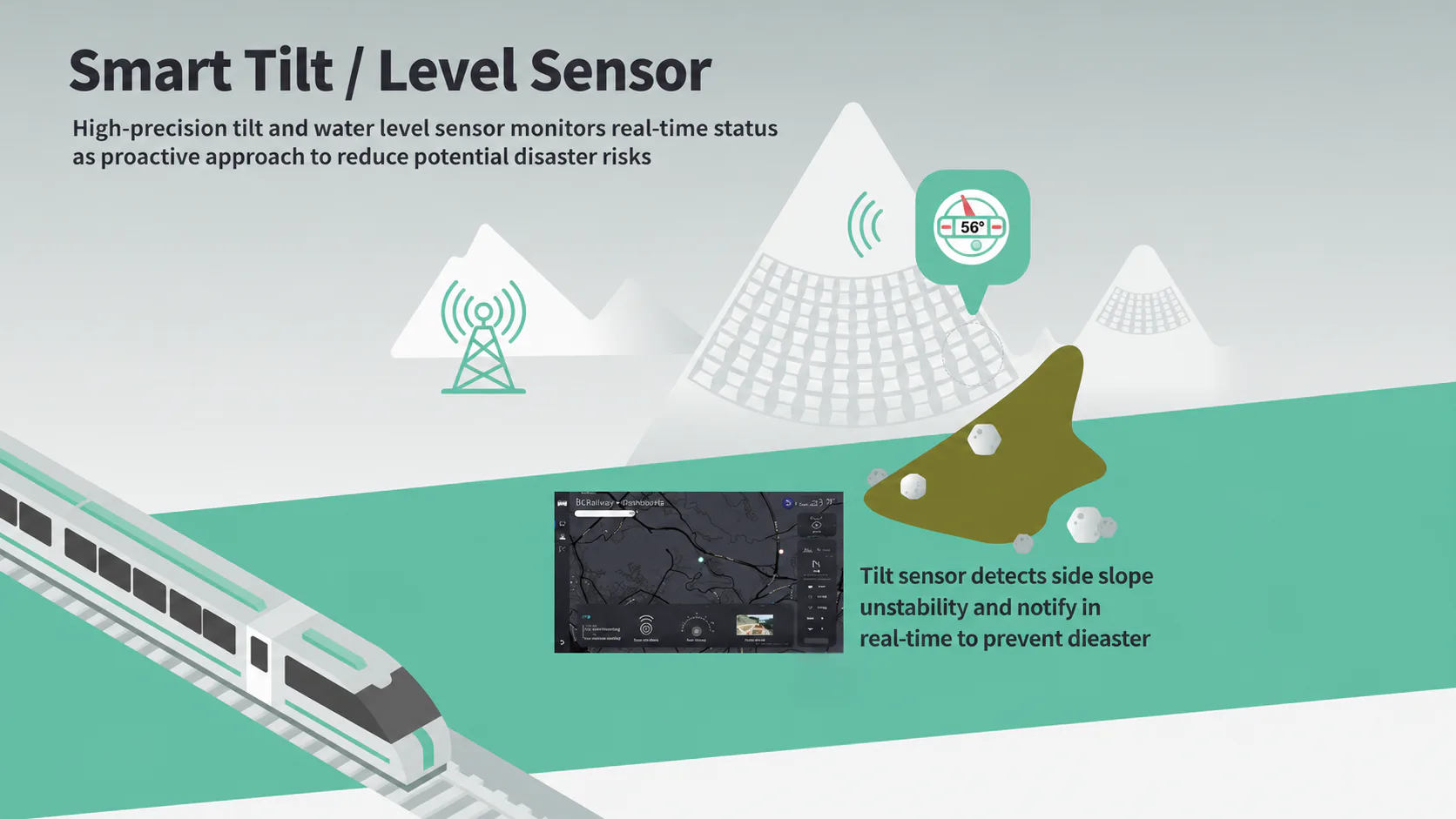
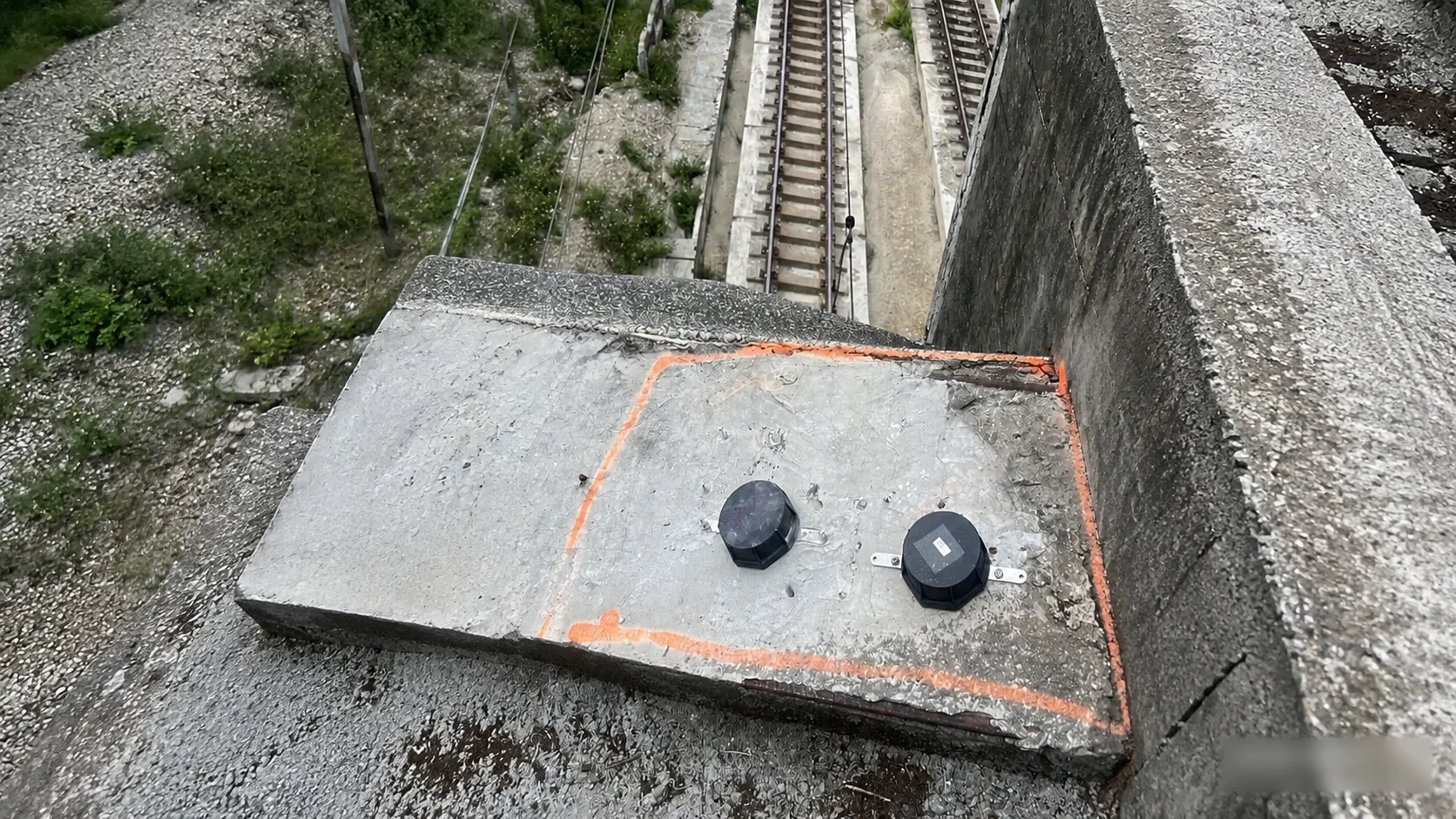
M20 tilt sensors were installed at high-risk locations above and near the tunnel to continuously measure surface inclination, transmitting data over NB-IoT to a remote platform. The wireless setup avoids extensive cabling, which suits terrain-constrained sections of track where construction access is limited.
An alert can prompt data review, inspection, or professional assessment; it does not establish that a service restriction or reinforcement decision has been made.
Value
Give inspection priorities a data reference
Retaining angle trends and event records can help maintenance teams prioritize points for review and examine conditions around a reported change.
The absence of an alert does not establish slope safety, particularly when data are missing or coverage is limited.
Next Step
Compile slope-anomaly records from recent rainy seasons and the current inspection routes to identify locations where continuous sensing would close the largest observation gaps.
Explore Solutions / Talk to an Expert
Image Gallery
Notes
- Thresholds, persistence rules, reporting intervals and recipients require project configuration and testing; wireless reporting still needs regular checks of mounting, power, connectivity and sensor baselines.
- Tilt monitoring supports site management; it does not replace established inspections or professional slope-safety assessment.
- Any reduction in confirmation time, patrol workload or service disruption requires project records; sensor installation alone does not demonstrate those outcomes.
- Every site is different; deployment plans and outcomes should be assessed by qualified professionals against actual site conditions.